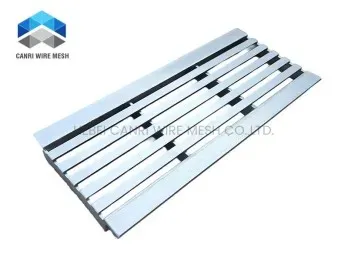
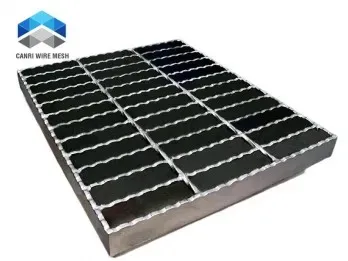
Matching trench grating openings with drainage channel geometry requires more than comparing nominal widths. I use the channel clear opening, grate bearing dimensions, hydraulic throat, design flow, slope, outlet configuration, traffic class, and installation tolerances to confirm compatibility. This process helps prevent restricted intake, unstable grates, trip hazards, excessive debris entry, and structural failure.
The six-step procedure is straightforward:
- Identify the channel clear opening and actual hydraulic throat.
- Confirm grate bearing, frame, support, and overall dimensions.
- Match grate open area with design flow, slope, run length, and outlet capacity.
- Orient grate openings according to runoff and pedestrian or vehicle travel direction.
- Verify ADA, heel-safety, load, corrosion, temperature, and sanitation requirements.
- Confirm the complete grate-channel assembly using drawings, tolerances, and manufacturer data.
Key Takeaways
- Grate openings must match the channel clear width, frame bearing, hydraulic throat, and actual installation tolerances.
- Open area alone does not determine drainage performance; slope, flow direction, run length, and outlet capacity also control intake.
- Slot width and orientation affect ADA compliance, heel safety, debris control, and bypass prevention in different ways.
- Load-rated trench grating must reflect pedestrian, trolley, forklift, vehicle, or heavy industrial traffic conditions.
- Field verification should compare approved drawings, measured dimensions, outlet elevations, and supplier fabrication data before ordering.
!
How to Match Trench Grating Openings with Drainage Channel Geometry
I begin by treating the grate and channel as one engineered assembly rather than two independent products. The grate must sit on the intended frame or bearing ledge, cover the channel without unsupported edges, and expose enough effective opening for the expected runoff. At the same time, the opening geometry must control debris, protect users, and support the required traffic load.
A practical design review should record the channel internal width, external width, depth, frame width, grate length, grate width, bearing-bar direction, slot dimensions, opening percentage, slope, run length, outlet size, and outlet elevation. I also check whether the channel is polymer concrete, cast concrete, stainless steel, galvanized steel, or another material because frame movement and corrosion behavior can differ. The final selection should be based on verified dimensions and tested load data rather than a nominal product name alone.
1. Establish the Channel Clear Opening and Hydraulic Throat
The clear opening is the unobstructed width available beneath the grate, while the hydraulic throat is the effective entry region through which water passes into the channel. These dimensions may differ when a frame, lip, retaining bar, ledge, or internal channel profile reduces the available area. I measure both dimensions at several points because concrete placement, coatings, welds, and frame distortion can create local restrictions.
For a new project, I use the approved channel drawing and compare it with the grate supplier’s fabrication drawing. For an existing installation, I measure the opening at the center, both ends, and any transition or corner. A grate that is nominally 200 mm wide may not fit a channel with a 200 mm nominal label if the actual bearing surface, frame return, or internal lip reduces the usable dimension.
The channel must also be evaluated hydraulically. Design flow depends on contributing catchment area, rainfall intensity, surface slope, runoff coefficient, channel slope, roughness, outlet configuration, and the length of the drainage run. A grate with a large open percentage cannot compensate for an undersized channel body, insufficient longitudinal slope, blocked outlet, or inadequate downstream pipe capacity.
2. Match Drainage Channel Width with Grating Dimensions
When reviewing drainage channel width and grating dimensions, I separate four measurements: grate overall width, grate bearing width, frame-to-frame width, and channel clear width. The grate overall width may include edge bars or support flanges that do not contribute to hydraulic intake. The bearing width must be sufficient to transfer loads into the frame without rocking, edge crushing, or local deformation.
I also verify the grate length against the channel module length. Shorter panels may create repeated joints, while longer panels can become difficult to remove, transport, or align around corners and access points. Joint positions should avoid concentrated wheel paths, abrupt changes in channel direction, and locations where the channel frame is interrupted.
A useful dimensional schedule includes the following checks:
| Measurement |
What I verify |
Why it matters |
| Channel clear width |
Unobstructed internal opening |
Confirms hydraulic and physical fit |
| Frame bearing width |
Continuous support under grate edges |
Controls stability and load transfer |
| Grate overall width |
Full fabricated dimension |
Prevents interference with paving or concrete |
| Grate opening width |
Clear slot or mesh opening |
Affects intake, safety, and debris entry |
| Panel length |
Module and joint spacing |
Supports alignment and maintenance |
| Channel depth |
Internal flow depth and outlet connection |
Affects hydraulic capacity |
If the grate is installed in a paved area, I allow for the specified installation tolerance and paving finish. The finished surface should meet the grate edge without leaving a raised lip or depression that redirects water around the opening. I do not assume that a nominally matching grate will fit after bedding, coating, sealant, and frame tolerances are included.
3. Match Grate Open Area to Flow, Slope, and Outlet Capacity
For trench drain grate sizing for drainage channels, I first determine the required design flow and then review the channel’s hydraulic capacity. The grate must admit the expected flow without excessive bypass, but the channel and outlet must also convey that flow. I compare the manufacturer’s tested intake or hydraulic data with the design assumptions rather than estimating capacity from open area alone.
Open area is affected by slot width, bearing-bar width, cross-bar spacing, panel length, and frame obstruction. A grate with narrow repeated slots may have a lower effective intake than a mesh-style grate with the same nominal open percentage, especially when leaves, sediment, packaging debris, or ice partially block the openings. I also consider whether runoff approaches from one side, both sides, or directly along the grate.
Slope and run length matter because water can bypass a grate when the surface flow velocity is high or the grate opening is too small for the approaching sheet flow. Long runs may require intermediate outlets, deeper channels, or different channel sections to prevent water levels from rising near the upstream end. The outlet elevation must be checked against the channel invert so that the drain does not become a storage point during peak flow.
A basic capacity review should include:
- Design flow from the contributing surface and rainfall calculation.
- Channel width, depth, longitudinal slope, and internal roughness.
- Grate open area and effective intake under expected debris conditions.
- Flow direction across and along the grate.
- Outlet diameter, number of outlets, invert elevation, and downstream capacity.
- Freeboard or allowable surface water depth during the design event.
4. Orient Openings for Drainage, Pedestrian Safety, and Debris Control
Grate opening orientation changes how water enters the channel and how users interact with the surface. In pedestrian areas, I generally avoid placing elongated slots in the direction of common foot traffic, wheelchair movement, bicycle travel, or cart wheels when that orientation could trap a heel or wheel. The final orientation must follow the applicable accessibility requirements and project specification.
For vehicle areas, I evaluate tire direction, wheel loads, turning movements, and the possibility of impact at panel joints. Bearing bars should normally be arranged according to the manufacturer’s structural design so that the primary load spans the supported direction. Rotating a grate to improve drainage can reduce its intended load path if the support bars are no longer oriented correctly.
Debris control requires a separate decision from open-area maximization. Wider slots may admit leaves, stones, tools, or packaging material that can obstruct the channel or outlet. Narrower openings can reduce debris entry and improve heel safety, but they may require greater grate length or additional drainage points to provide the same effective intake.
5. Verify ADA, Heel Safety, and Bypass Prevention Requirements
The question of what size grate opening is required for ADA compliance cannot be answered by a single universal dimension without checking the governing code, project location, grate type, and installation context. I use the applicable accessibility standard and project specification to confirm maximum opening dimensions, orientation, surface stability, and changes in level. The grate should not create an avoidable barrier for wheelchairs, walking aids, canes, or small wheels.
Heel safety is particularly important in entrances, sidewalks, plazas, transit areas, and commercial buildings. A grate may have sufficient hydraulic area but still be unsuitable if the opening catches footwear or creates a narrow wheel path. I therefore review slot width, slot direction, edge treatment, surface flatness, and the transition between adjacent paving materials.
Bypass prevention depends on the relationship between surface slope and grate position. If the channel is placed too far from the low point, water can pass around the grate instead of entering it. I confirm the crossfall, longitudinal fall, grate elevation, and surrounding finish levels in the field before permanent bedding or concrete placement.
6. Check Load Ratings, Traffic Class, and Installation Requirements
The trench drain load rating for commercial applications should reflect the actual traffic and not simply the building type. A pedestrian courtyard, loading dock, parking aisle, warehouse floor, and airport service road impose different wheel loads, impact levels, braking forces, and turning stresses. I select the applicable load class using the project standard and confirm that the complete grate, frame, anchors, channel body, and concrete surround have been tested or designed as an assembly.
Material selection depends on corrosion, temperature, sanitation, chemical exposure, and maintenance conditions. Stainless steel is commonly considered for corrosive, wet, food-processing, coastal, or washdown environments, while galvanized or painted carbon steel may suit less aggressive conditions when the coating system is properly specified. Cast iron can be suitable for heavy traffic, but its mass, corrosion behavior, surface treatment, and handling requirements should be reviewed before selection.
I also distinguish between the grate material and the channel material. A stainless steel grate installed over a channel with an incompatible frame can still develop corrosion or movement at the interface. In industrial or sanitation-sensitive areas, I check weld finish, crevice exposure, cleaning access, chemical compatibility, temperature range, and whether the assembly can be removed for inspection.
| Environment |
Primary design concern |
Typical review focus |
| Pedestrian area |
Heel and wheel safety |
Opening width, orientation, flatness |
| Parking or vehicle lane |
Wheel load and impact |
Load class, frame anchorage, support spacing |
| Food or sanitation area |
Cleaning and corrosion |
Stainless grade, weld finish, drainage slope |
| Coastal or chemical area |
Corrosion resistance |
Material, coating, galvanic compatibility |
| High-temperature area |
Thermal movement |
Expansion, material limits, joint detailing |
| Heavy industrial area |
Repeated dynamic loading |
Tested assembly, bearing bars, concrete surround |
Field Verification Before Ordering or Installation
Before I release a purchase order, I compare the architectural, civil, structural, and drainage drawings with the supplier’s shop drawing. The review should identify the channel clear width, grate bearing, frame type, panel lengths, corner conditions, outlet locations, invert elevations, and finished floor levels. Any mismatch should be resolved before fabrication because a small dimensional error can affect the entire drainage run.
I also create a field-verification record containing measured dimensions, measurement dates, equipment used, surface conditions, and acceptable tolerances. For existing channels, I photograph the frame, joints, outlets, transitions, and damaged areas, then record whether the grate is level, rocking, blocked, or deformed. This evidence helps distinguish a grate-sizing issue from a channel-capacity, slope, or maintenance issue.
When working with CANRI, I would request the product drawing, material specification, opening dimensions, load information, surface treatment, fabrication tolerance, and installation guidance for the proposed Trench Drain Grating. CANRI identifies itself as Hebei Canri Wire Mesh Co., Ltd., a manufacturer and supplier of steel gratings, drain gratings, stair treads, handrails, and related metal works, and states that it has operated as a factory for 15 years. Those company details should be considered alongside project-specific drawings and verified technical documentation rather than treated as a substitute for design review.
Common Matching Errors to Avoid
The first common error is selecting a grate from the channel’s nominal width without checking the actual bearing and frame dimensions. The second is calculating drainage capacity from open area alone while ignoring outlet restrictions, slope, run length, and debris accumulation. The third is orienting slots for appearance or convenience without checking traffic direction, accessibility, and structural bearing-bar orientation.
Another error is specifying the load rating for normal pedestrian use when maintenance vehicles, forklifts, delivery trucks, or turning wheels will cross the grate. I also avoid mixing a grate and frame from different systems unless the interface, bearing, fixing method, and load performance have been confirmed. Finally, I do not approve installation until finished paving levels, outlet elevations, and channel alignment have been checked on site.
Conclusion
To answer How to Match Trench Grating Openings with Drainage Channel Geometry, I use a complete measurement and verification process rather than relying on nominal grate width. I confirm the channel clear opening, hydraulic throat, bearing dimensions, grate open area, flow direction, slope, run length, outlet configuration, accessibility limits, load class, material compatibility, and installation tolerances. This approach helps ensure that the trench grating admits water, remains stable under expected traffic, and does not introduce avoidable safety or maintenance problems.
My recommended next step is to prepare a dimensional schedule and marked-up drawing before ordering. Include measured channel width, frame bearing, grate opening, panel length, outlet elevation, design flow, traffic class, material, surface treatment, and required tolerances. Then compare those values with the supplier’s complete grate-channel assembly data, whether the selected system is supplied by CANRI or another manufacturer, and approve installation only after the field dimensions agree with the fabrication documents.