An export metalwork packing and labeling plan defines how fabricated steel products are protected, identified, documented, inspected, and released for international transport. In my experience, the plan should cover seven connected areas: shipment scope, risk assessment, packaging design, securing method, labeling and traceability, compliance documents, and pre-dispatch verification. This structure helps prevent impact damage, rust, handling errors, customs delays, and mismatches between the cargo and its paperwork.
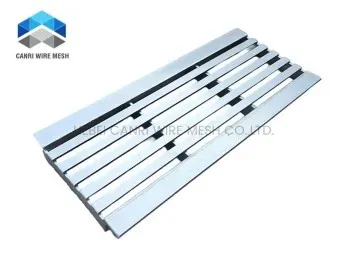
For manufacturers such as CANRI, which supplies steel grating, drain grating, stair treads, handrails, railings, fencing, and other metalwork, packaging decisions must reflect the geometry and handling needs of each product. A small galvanized stair tread, a long handrail assembly, and a heavy steel grating bundle cannot use the same packing specification. The plan must therefore connect each part number to its dimensions, mass, surface finish, crate identification, restraint method, and destination requirements.
!
Key Takeaways
- An export metalwork packing and labeling plan links product risks to packaging, restraint, documentation, and inspection controls.
- Heavy steel products require verified dimensions, gross weights, lifting points, center-of-gravity information, and load restraint details.
- Corrosion protection should match the metal finish, voyage duration, humidity exposure, and storage conditions after arrival.
- Export marks should connect crate IDs, part numbers, quantities, purchase orders, destination details, and packing-list entries.
- ISPM 15 evidence, customs documents, verified gross mass, and destination-country rules should be checked before release.
- A signed acceptance checklist creates accountability for production, packing, quality control, logistics, and shipping teams.
What Should Be Included in an Export Metalwork Packing and Labeling Plan?
I recommend organizing the plan into the following seven components before packing begins:
- Shipment scope: List purchase-order numbers, part numbers, drawings, quantities, finishes, delivery terms, destination, and required shipping date.
- Risk assessment: Record product dimensions, mass, sharp edges, fragility, corrosion sensitivity, stacking limits, and handling risks.
- Packaging design: Specify pallets, crates, skids, separators, protective films, desiccants, edge guards, and ventilation requirements.
- Securing method: Define blocking, bracing, strapping, lifting points, center of gravity, and container-loading arrangements.
- Labeling and traceability: Assign crate IDs and show shipping marks, handling symbols, product references, quantities, and destination information.
- Compliance documents: Prepare the commercial invoice, packing list, transport documents, certificates, customs information, and ISPM 15 evidence when wood packaging is used.
- Pre-dispatch verification: Check package condition, labels, weights, dimensions, photographs, documents, and final approval signatures before shipment release.
Export Metalwork Packaging Requirements
Export packaging requirements begin with the physical characteristics of the metalwork rather than the preferred crate size. I first classify each item by length, width, height, gross mass, surface finish, edge condition, and sensitivity to bending or abrasion. This classification determines whether the shipment needs a steel-reinforced skid, timber crate, plywood case, pallet, bundle frame, or a combination of supports.
The packaging must protect products from impact, vibration, moisture, corrosion, stacking pressure, and handling equipment. For example, steel grating panels should be supported at several points to prevent twisting, while long handrail sections may need intermediate spacers to stop contact damage. Sharp edges should be covered with guards or formed separators, and finished or coated surfaces should not rub directly against untreated steel, rough timber, or metal straps.
How Should Metalwork Be Packed for International Shipping?
I use a product-specific packing schedule that records the package type, internal supports, restraint points, and maximum permitted stacking arrangement. Bundled items should be aligned before strapping, with spacers placed where forklift tines or lifting slings will contact the load. Individual components should be separated when their finishes, profiles, or tolerances could be damaged by movement during ocean or road transport.
Heavy metalwork should sit on a load-bearing base that distributes weight across the pallet or skid. The plan should state the base dimensions, support spacing, fastener type, strap position, and clearance for lifting equipment. If the package is too heavy for manual handling, the crate should show lifting points and the approximate center of gravity so that operators can position slings or forks safely.
Packaging Decision Matrix for Fabricated Metalwork
| Metalwork characteristic |
Main risk |
Recommended packaging control |
Required identification or instruction |
| High mass or concentrated load |
Base failure or package deformation |
Reinforced skid, load-spreading supports, verified gross weight |
Heavy-lift and lifting-point marks |
| Long or flexible profile |
Bending, twisting, or overhang damage |
Multiple supports, end protection, bracing, controlled stacking |
Length, center-of-gravity, and orientation marks |
| Galvanized or painted finish |
Scratching, abrasion, or coating damage |
Separators, protective film, non-abrasive restraints |
Finish reference and handling instructions |
| Bare carbon steel |
Rust during transit or storage |
VCI material, dry packing, desiccant, sealed wrap where appropriate |
Keep-dry and corrosion-protection instructions |
| Sharp edges or projections |
Personnel injury and packaging puncture |
Edge guards, caps, separators, reinforced walls |
Caution and handling marks |
| Fragile welded assembly |
Weld or geometry damage |
Immobilization, foam or timber supports, no-stacking instruction |
Fragile, orientation, and no-stack marks |
| Repeated small components |
Quantity errors or mixing |
Inner cartons, counted bundles, compartmented packing |
Part number, quantity, and package sequence |
Corrosion Protection and Handling Requirements
Corrosion protection for exported metal parts should be selected according to the material, surface treatment, climate, transport duration, and expected storage period. Galvanized, stainless, aluminum, painted, and bare carbon-steel items have different exposure risks, so I do not apply one corrosion method to every product. The packing record should identify the protection method and the person responsible for confirming that it was applied.
For bare or lightly protected steel, common controls include dry wrapping, vapor corrosion inhibitor materials, desiccant, sealed barrier film, and separation from wet timber. These controls are only effective when the product is dry before packing and the package remains intact. The plan should also state whether the cargo may be stored outdoors, whether the packaging can be opened for inspection, and how exposed surfaces should be treated after unpacking.
Moisture control must be coordinated with ventilation and condensation risk. A sealed package can reduce external moisture entry but may retain moisture introduced during packing, while an open crate can allow air exchange but provides less protection against rain and sea spray. I therefore record the packing environment, surface condition, protection materials, and any required inspection interval for long-distance shipments.
Shipping Marks and Labels for Metalwork Exports
Shipping marks and labels for metalwork exports must allow warehouse staff, carriers, customs officials, and the consignee to identify every package without opening it. Each crate, pallet, bundle, or carton should receive a unique package ID that corresponds to the packing list. The mark should remain legible after handling, condensation, abrasion, and exposure to ordinary warehouse conditions.
What Information Should Appear on Export Shipping Marks?
At minimum, I include the consignee or project reference, destination country and city, purchase-order number, package number, part number, quantity, gross weight, net weight, dimensions, and handling symbols where applicable. For multi-package shipments, the sequence should use a clear format such as “1 of 6” or “Crate 01/06.” The same identifiers should appear on the packing list, commercial invoice where relevant, photographs, and internal release record.
Marks should be placed on at least two visible sides of a crate when the package geometry permits. Heavy or oversized packages should also show lifting points, center-of-gravity information, “This Side Up,” “Keep Dry,” “Do Not Stack,” or other instructions that reflect actual handling requirements. Labels should not cover ventilation openings, inspection marks, timber treatment marks, or safety information.
The packing list should provide a package-by-package breakdown rather than only a total shipment quantity. For each package, I recommend listing the crate ID, part numbers, descriptions, quantities, net weight, packaging weight, gross weight, dimensions, cubic volume, and remarks. This format allows the consignee to reconcile deliveries and helps customs, freight forwarders, and warehouse teams identify discrepancies quickly.
Compliance Documents and International Requirements
The export file should contain the commercial invoice, packing list, transport document, purchase-order references, certificates required by the buyer, and customs information for the products. Depending on the transaction, the file may also require a certificate of origin, material certificate, inspection report, treatment certificate, or destination-specific declaration. I verify the required document set against the sales contract and importing-country instructions rather than relying on a standard document bundle.
Wooden pallets, crates, skids, and timber blocking used in international trade may need to comply with ISPM 15. When applicable, the wood should carry the recognized treatment mark, and the packing file should retain supplier evidence or photographs showing the mark clearly. The exact requirement can depend on the destination, transport route, packaging material, and customs authority, so the logistics team should confirm current destination rules before packing.
Country-of-origin marking and HS-code information must be handled carefully. The plan should identify who provides the classification data, who checks the origin statement, and how the product description is kept consistent across the invoice, packing list, and customs entry. A packing label is not a substitute for customs documentation, and a verified gross mass declaration is not the same document as a packing list.
A packing list describes the physical contents and package structure, including quantities, weights, dimensions, and crate IDs. A VGM declaration confirms the verified gross mass of a packed container for maritime transport. The packing list may cover cargo packed in multiple crates, while the VGM normally applies to the total loaded container mass and must be prepared through the responsible shipper or logistics process.
How to Create an Export Metalwork Packing and Labeling Plan
1. Define the Shipment Scope and Package Register
I begin by creating a controlled package register before fabrication is complete. The register links each part number to its drawing revision, description, quantity, finish, package ID, destination, and purchase-order line. It should also include planned and actual dimensions, net and gross weights, photographs, and any special handling or inspection requirement.
A revision number and approval date should appear on the packing specification. If the product quantity, crate arrangement, finish, or destination changes, the register must be revised and redistributed to production, quality control, logistics, and the customer when approval is required. This prevents an outdated packing list or label file from being used during final loading.
2. Assess Product and Transport Risks
Next, I review the risks created by mass, geometry, surface finish, corrosion sensitivity, sharp edges, fragile welds, and stacking limitations. I also consider the expected transport chain, including internal movement, truck loading, port handling, container loading, discharge, and delivery to the final site. Each identified risk should have a stated control rather than a general instruction such as “pack securely.”
For example, a long steel railing may need multiple support points and end caps, while a dense bundle of grating may require a reinforced skid and a declared lifting method. If the center of gravity is offset, the package drawing should show the imbalance so that lifting equipment can be positioned correctly. The risk assessment should be reviewed by someone familiar with both the product design and the intended transport method.
3. Approve Packaging, Restraint, and Container Loading
The approved packaging specification should state the crate or pallet construction, internal supports, blocking, bracing, strapping, wrapping, corrosion protection, and lifting provisions. I also record the loading sequence and the location of each package inside the container or vehicle. Heavy items should be positioned to maintain load balance, protect lighter cargo, and avoid excessive concentrated forces on the container floor.
Container loading photographs should show the package arrangement before doors are closed. The file should retain evidence of dunnage, straps, timber blocks, edge protection, and final door security. If the cargo requires special equipment, such as a spreader beam or forklift extension, that requirement should be shown on the package label and shipment instruction.
4. Apply Labels and Reconcile Documents
After packing, I assign the final crate IDs and compare every physical mark with the package register. The check should confirm spelling, destination, package sequence, part number, quantity, gross weight, dimensions, handling symbols, and any required timber-treatment mark. Labels that are unclear, incomplete, or attached to removable wrapping should be replaced before dispatch.
The final packing list should be generated from verified package data, not from the original production estimate. I reconcile the list against the actual scale readings, tape measurements, package photographs, and loaded-container record. Any difference in quantity, weight, dimensions, or package number should be resolved before the document is signed.
5. Complete Pre-Dispatch Verification and Release
The final acceptance inspection should be signed by the responsible departments. At minimum, I assign ownership for production completion, packing supervision, quality inspection, logistics documentation, weight verification, and shipment release. A single person may perform more than one role in a small manufacturer, but the responsibilities should still be written down.
The shipment should not be released until the inspection confirms product identity, surface protection, crate condition, restraint, lifting points, center-of-gravity marks, label legibility, ISPM 15 evidence where applicable, and document consistency. I also retain dated photographs of each package, the completed checklist, scale records, and the approved revision of the package register. These records support claims investigation if damage or shortage is reported after delivery.
Export Metalwork Packing and Labeling Acceptance Checklist
| Checkpoint |
Acceptance requirement |
Responsible role |
| Product identity |
Part numbers, drawings, finishes, and quantities match the order |
Production or quality control |
| Package condition |
No visible damage, unstable supports, exposed sharp edges, or loose components |
Packing supervisor |
| Corrosion control |
Surfaces are dry and the specified protection method is applied |
Quality control |
| Weight and dimensions |
Net, packaging, and gross weights are verified; dimensions are measured |
Logistics or shipping |
| Restraint |
Blocking, bracing, strapping, and lifting provisions match the approved specification |
Packing supervisor |
| Labels and marks |
Crate IDs, destination, package sequence, handling marks, and quantities are legible |
Logistics |
| Wood compliance |
ISPM 15 mark or required treatment evidence is present when applicable |
Logistics or compliance |
| Documents |
Invoice, packing list, transport data, origin information, and certificates are consistent |
Export coordinator |
| Final release |
Checklist, photographs, package register, and approvals are complete |
Authorized shipment approver |
Conclusion
What Should Be Included in an Export Metalwork Packing and Labeling Plan? The answer is a controlled system covering shipment scope, product-risk assessment, packaging construction, corrosion protection, load restraint, crate marks, package traceability, customs documentation, ISPM 15 requirements, verified weights, and final inspection. For steel fabrication products such as grating, stair treads, handrails, railings, fencing, and drain grating, the plan should be adapted to the product’s mass, dimensions, finish, fragility, sharp edges, and destination.
I recommend issuing the plan with the purchase order or shipment file and maintaining a revision-controlled package register throughout production. Before release, the responsible team should compare every label and document with the physical cargo, verify weights and dimensions, photograph the completed packages, and sign the acceptance checklist. This approach gives CANRI and other metal fabricators a repeatable method for reducing transport damage, customs discrepancies, rust exposure, and delivery-side identification errors.