When I assess a supplier for drawing-based metalwork production, I verify more than whether the company can quote a drawing. I check technical interpretation, materials, tolerances, equipment, inspection evidence, production capacity, delivery controls, and commercial risk before approving an order. This process helps control dimensional failures, unexpected tooling costs, delayed shipments, and repeat-production problems.
Drawing-based production converts engineering drawings, models, specifications, and revision instructions into physical metal parts or assemblies. The supplier must interpret the documentation correctly, select suitable processes, control critical features, and provide objective evidence that the finished products meet the requirements. My preferred method is a seven-part assessment: define the drawing requirements, verify process and equipment fit, review quality evidence, confirm material traceability, test capacity and delivery, run a prototype or first article, and approve the supplier with a weighted scorecard.
!
Key Takeaways
- I verify drawing interpretation, material grades, tolerances, finishes, equipment, and inspection methods before requesting production pricing.
- A supplier should provide calibration records, material certificates, inspection reports, and documented nonconformance controls.
- Capacity claims require evidence from machine lists, current loading, labor availability, subcontractor controls, and shipment history.
- A prototype or first article exposes process weaknesses before they affect a full production batch.
- A weighted scorecard should include capability, quality, capacity, cost, communication, and operational risk with pass-fail thresholds.
What Is Drawing-Based Metalwork Production?
Drawing-based metalwork production is the manufacture of steel, stainless steel, aluminum, or other metal components from customer-controlled technical documents. Those documents may specify dimensions, geometric tolerances, hole patterns, weld symbols, surface finishes, material grades, corrosion protection, load requirements, and packaging instructions. Unlike catalog purchasing, the supplier is responsible for converting design intent into a repeatable manufacturing process.
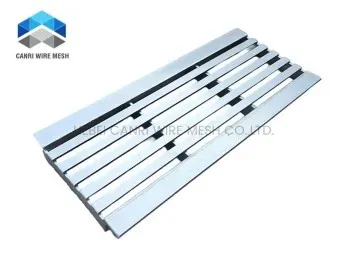
The work may include CNC machining, laser cutting, plasma cutting, bending, drilling, welding, stamping, grinding, galvanizing, powder coating, assembly, or a combination of these operations. For example, CANRI manufactures steel grating products, drain gratings, stair treads, handrails, fences, Singapore gratings, and other metal works. Its published service information also describes computer-aided design, three-dimensional software, customized production, product marking, and project coordination, all of which are relevant capabilities to verify when assessing a drawing-based supplier.
How to Assess a Supplier's Capability for Drawing-Based Metalwork Production
I use the following sequence for both new suppliers and existing suppliers receiving a substantially revised drawing package. Each stage produces a document or record that can be retained in the procurement file. If a supplier cannot provide objective evidence at a particular stage, I treat that gap as a qualification risk rather than assuming the capability exists.
-
Define the drawing requirements before contacting suppliers. Identify critical dimensions, functional surfaces, datum references, tolerance classes, material grades, weld requirements, surface treatments, inspection points, packaging rules, and revision status. Separate critical-to-function characteristics from non-critical dimensions so the supplier can price inspection effort accurately. I also identify whether the order is a prototype, low-volume batch, recurring production, or high-volume program because each requires a different capacity and process strategy.
-
Verify process and equipment fit against the part geometry. I ask the supplier to map every major feature to a manufacturing operation, machine type, tooling requirement, and inspection method. A supplier offering CNC machining for custom metal parts should identify machine travel, spindle capacity, axis count, positional accuracy, workholding method, and available programming resources. For fabricated parts, I verify cutting thickness, press-brake capacity, welding processes, fixture design, heat input control, grinding, coating, and any required post-processing.
-
Assess quality evidence rather than accepting general claims. I request the quality manual or process summary, inspection plans, sample inspection reports, calibration certificates, nonconformance records, corrective-action examples, and first article inspection formats. If the supplier claims ISO 9001 certification, I verify the certificate scope, issuing body, site address, and expiration date. Certification supports system evaluation, but it does not replace a part-specific inspection plan or evidence that the supplier can hold the required tolerances.
-
Confirm materials and traceability from purchase to shipment. I ask how the supplier identifies heat numbers, mill certificates, lot numbers, substitutions, and material status during production. The process should prevent mixed grades and should retain certificates alongside the job record. For steel fabrication products, I also verify whether galvanizing, painting, powder coating, passivation, or other finishes have defined thickness, adhesion, appearance, and corrosion-resistance requirements.
-
Test production capacity and delivery controls. I compare the requested quantity and required date with the supplier's available equipment hours, current order loading, staffing, tooling schedule, raw-material access, finishing capacity, and packaging resources. I request a realistic manufacturing schedule that separates engineering review, material procurement, fabrication, inspection, finishing, packing, and transport. A supplier that provides only a single optimistic delivery date has not demonstrated capacity planning.
-
Run a prototype, sample, or first article before full release. The test part should include the most difficult features, tightest tolerances, critical material requirements, representative welds, specified finishes, and identification marks. I compare the supplier's measurement report with the drawing and check whether the inspection method is suitable for the tolerance being claimed. For repeat programs, I define the approved sample, inspection frequency, change-control process, and requalification triggers before production begins.
-
Approve the supplier with a weighted scorecard. I assign measurable scores instead of choosing solely on unit price. The scorecard should record evidence, open actions, owner, due date, and pass-fail status for each category. I do not approve a supplier with an unresolved failure in a critical drawing feature, material traceability, inspection capability, intellectual-property protection, or delivery feasibility.
Use a Drawing-Based Metalwork Supplier Evaluation Checklist
A practical checklist should connect every drawing requirement to a supplier response and an evidence record. I normally use the following fields: requirement, supplier explanation, objective evidence, risk level, corrective action, responsible person, and approval status. This structure prevents technical questions from being lost in commercial email exchanges.
| Assessment area |
Evidence I request |
Suggested pass threshold |
| Drawing interpretation |
Marked-up drawing, process plan, clarification log |
100% of critical features addressed |
| Materials |
Mill certificate, heat or lot identification, substitution procedure |
100% traceability for production lots |
| Equipment fit |
Machine list, capacity data, tooling and fixture plan |
All required operations available or controlled |
| Dimensional control |
Inspection plan, measurement records, gauge list |
100% of critical dimensions inspected |
| Calibration |
Current certificates for gauges and instruments |
No expired equipment used for acceptance |
| Capacity |
Loading plan, staffing, subcontractor list, schedule |
Confirmed capacity for required quantity and date |
| Delivery history |
On-time shipment records or customer references |
At least 90% on-time performance preferred |
| Communication |
Response matrix, engineering contact, escalation route |
Technical questions answered within two business days |
| Risk controls |
IP, continuity, change notification, requalification plan |
No unresolved critical risk |
I use a weighted model when several suppliers pass the basic requirements. A typical allocation is 30% technical capability, 25% quality systems, 20% capacity and delivery, 10% commercial value, 5% communication, and 10% operational risk. I set a minimum overall score of 75 out of 100, while requiring at least 70% in technical capability and quality; any critical fail overrides the numerical result.
Evaluate the Supplier's Technical Capability
The most important technical question is whether the supplier can translate the drawing into a controlled process rather than simply reproduce a similar-looking part. I ask the engineering team to review datums, tolerances, hole locations, bend deductions, weld access, distortion risk, surface requirements, and assembly interfaces. Their response should identify ambiguous dimensions and propose written clarifications before production begins.
For CNC machining, I verify machine envelope, axis configuration, positional capability, tool management, workholding, programming software, and inspection access. For sheet metal and structural fabrication, I review cutting tolerances, forming limits, weld procedure control, fixture repeatability, distortion correction, and finishing allowances. Suppliers producing steel grating products should also explain how bearing bars, cross bars, frames, clips, stair treads, and connection details are controlled when the drawing includes non-standard spacing or load requirements.
I ask for evidence from a comparable part, not necessarily an identical part. Useful evidence includes a redacted drawing review, process-flow diagram, sample control plan, dimensional report, weld inspection record, coating report, or photographs showing part identification and inspection stages. CANRI states that it supports customized metal works and uses CAD and 3-D software for technical services, so a buyer should still request a project-specific drawing review and sample inspection plan before treating those general capabilities as qualified for a particular part.
Review Quality Control and Inspection Processes for Drawing-Based Manufacturing
A supplier's inspection equipment must match the tolerances and features on the drawing. I check for calibrated calipers, micrometers, height gauges, thread gauges, pin gauges, surface plates, coating-thickness meters, angle measurement tools, and, when necessary, coordinate measuring equipment or external laboratory services. The supplier should define measurement resolution, acceptance criteria, sampling frequency, and record retention for each critical characteristic.
Calibration control is a basic pass-fail requirement. I confirm that instruments have unique identification numbers, current certificates, known measurement ranges, and a process for removing overdue or damaged equipment from production. If a drawing specifies a narrow tolerance, I also ask whether the measurement system has sufficient resolution and repeatability; an instrument that cannot reliably distinguish the tolerance cannot support a valid acceptance decision.
I also examine nonconformance controls. The supplier should identify defective material, segregate it from accepted product, document the cause, obtain approval for any deviation, and verify corrective action. Change notification must cover material substitutions, process changes, machine changes, subcontractor changes, drawing revisions, and finishing changes, because any of these can affect fit, strength, corrosion resistance, or appearance.
Confirm Materials, Finishes, and Traceability
Material verification begins with the purchase order and continues through receiving, cutting, fabrication, inspection, and shipment. I compare the specified grade, thickness, condition, and standard with the mill certificate and the supplier's internal identification system. If the supplier cannot preserve lot identity after cutting or splitting material, I require a documented method such as transferred heat numbers, tags, traveler records, or controlled material mapping.
Finishes require the same level of specificity as dimensions. Instead of accepting terms such as “protected” or “premium finish,” I specify coating type, minimum thickness, preparation method, color reference, repair method, inspection method, and packaging protection. For galvanized steel, painted components, stainless steel, or aluminum assemblies, I ask for applicable certificates and test records that can be linked to the shipment.
Verify Manufacturing Capacity and Delivery Reliability
Capacity is not the same as the number of machines listed on a supplier profile. I ask how many hours are available during the proposed production window, which operations are bottlenecks, whether overtime is planned, and what happens if a machine fails. I also verify raw-material lead times, finishing capacity, inspection staffing, packaging space, export documentation, and the use of external subcontractors.
I compare the proposed schedule with the required quantity and takt or shipment dates. A credible plan includes engineering approval, material release, production, in-process inspection, final inspection, rework allowance, finishing, packing, and logistics. For a supplier such as CANRI, whose published product range includes gratings, drain products, stair treads, handrails, fences, and other metal works, I would ask how shared production resources are allocated when several project orders overlap.
Delivery reliability should be measured from records rather than assurances. I request shipment history for comparable products, including promised date, actual date, quantity delivered, rejection quantity, and reasons for delay. If the supplier lacks formal on-time data, I use milestone reporting during the first order and set a corrective-action trigger for any delay that threatens the agreed shipment date.
Evaluate Commercial and Operational Risk
Price comparison should include tooling, programming, samples, inspection, packaging, freight, duties, rework, and potential field-failure costs. A lower quoted unit price may not be economical if the supplier excludes first article inspection, material certificates, special packaging, finishing tests, or engineering clarification. I request a quotation that separates recurring unit cost from one-time tooling and setup charges.
Intellectual-property protection is equally important for drawing-based work. I ask who can access drawings, where files are stored, whether subcontractors receive controlled copies, how obsolete revisions are blocked, and whether confidentiality terms apply to employees and external processors. I also require written change notification and approval before any design, material, process, or subcontractor change is implemented.
Business continuity review should cover financial stability, backup equipment, alternate material sources, emergency staffing, disaster recovery, cyber protection, and successor arrangements for key personnel. I identify requalification triggers such as a new production site, major equipment replacement, ownership change, repeated nonconformance, missed delivery performance, unapproved subcontracting, or a drawing revision that changes critical features. This converts supplier qualification from a one-time approval into an ongoing control process.
Conclusion
How to assess a supplier's capability for drawing-based metalwork production depends on evidence, not a company profile or a low quotation. I begin with a feature-by-feature drawing review, then verify process and equipment fit, quality controls, calibration, material traceability, capacity, delivery history, and risk controls. I use a prototype or first article to confirm that the supplier can turn its stated capability into an accepted part.
Before placing an order, I recommend completing the drawing-based metalwork supplier evaluation checklist, collecting objective records, and applying a weighted scorecard with defined pass-fail thresholds. Companies such as CANRI may offer relevant steel fabrication products, customized metal works, CAD support, project coordination, and more than 15 years of manufacturing experience, but the final decision should still depend on evidence for the specific drawing, material, tolerance, quantity, and delivery requirement. This documented approach reduces production uncertainty and creates a clear basis for supplier approval, monitoring, and requalification.