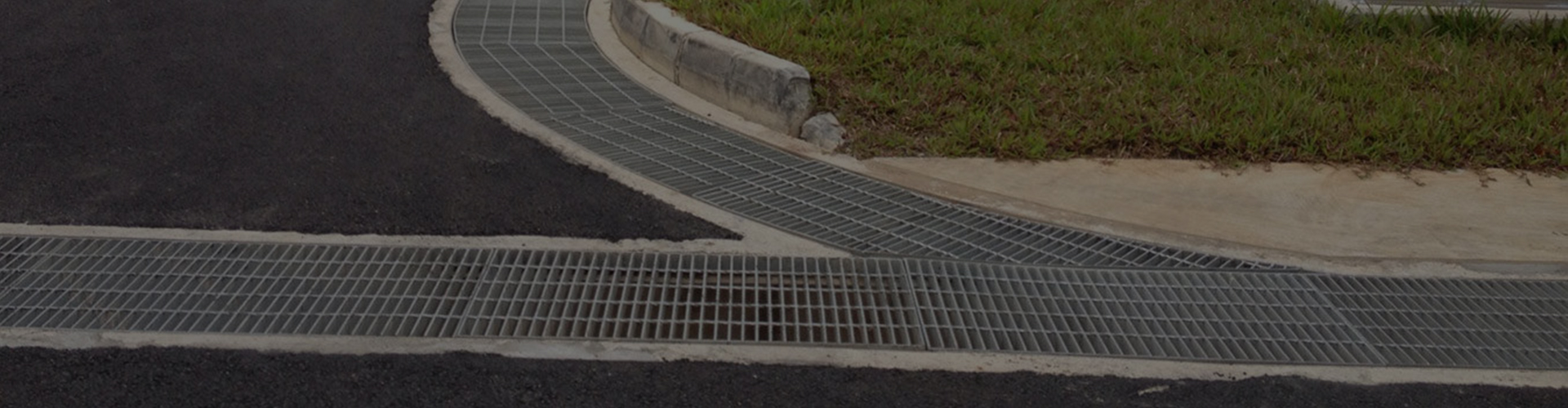
| Steel Grating |
| No. | Terms | Description |
| 1 | Material | Low carbon steel, mild steel, stainless steel |
| 2 | Material standard | GB700-88,ASTM(A36),BS4360(43A),AS3679 |
| 3 | Bearing bar size | 25x3,25x4,25x4.5,25x5,30x3,30x4,30x4.5, 30x5, 32x5,40x5,50x5,65x5.75x6,75x10.....100 x10mm etc;
I bar size: 25x5x3,30x5x3,32x5x3,40x5x3 etc;
US standard: 1"x3/16", 11/4”x3/16", 1 1/2”x3/16", 1"x1/4",1 1/4"x1/4", 1 1/2"x1/4",1"x1/8", 1 1/4"x1/8", 11/2"x1/8" etc |
| 4 | Bearing bar pitch | 12.5,15,20,23.85,25,30,30.16,30.3,32.5,34.3,35,38.1,40,41.25,60,80mm etc.
US standard:19-w-4,15-w-4, 11-w-4,19-w-2,15-w-2 etc |
| 5 | Cross bar pitch | 38.1,50,60, 76,80,100,101.6, 120mm, 2" & 4" etc |
| 6 | Surface treatment | untreated(black), hot-dipped galvanized ,powder coated,electroplate, painting or as per customers' requirement |
| 7 | Grating standard | YB/T4001.1-2007,ANSI/NAAMM(MBG531-88),BS4592 1987,AS1657-1985 |
| 8 | Bearing bar type | FLAT BAR / I-BAR / SERRATED BAR / SERRATED I-BAR |
| 9 | Application | Floor, walkway,industrial platform,stair tread,metal ceiling |
| 10 | Feature | Fine appearance,anti-corrosive,simple installation,light weight, high load,anti-skid,Prevent dirt deposition,ventilation,anti-explosion |
| 11 | Payment terms | T/T |
| 12 | Package | Pallets in containers packed by steel strap and worthy sea shipping,or according to customers' requirement |
| 13 | Delivery time | 15 days for a 20GP container |
| 14 | Remarks | Other sizes also can be customized according to customers' requirement |
How Compound Steel Grating Is Constructed
The Base Layer: Steel Bar Grating
Any standard welded bar grating type can serve as the structural base. The three most commonly specified base configurations for compound steel grating are:
JG323/40/100 (G323/40/100C)
The most widely used base type. 32mm × 3mm bearing bars at 40mm pitch, 100mm cross bar pitch. Provides a balanced combination of load capacity and material efficiency. This is the Canri default base configuration for standard compound grating panels.
JG253/30/100 (G253/30/100C)
25mm × 3mm bearing bars at 30mm pitch. Closer bearing bar spacing provides higher surface rigidity and better support for the top plate — recommended when the checkered plate thickness is 3mm and spans are medium.
JG323/60/100 (G323/60/100C)
32mm × 3mm bearing bars at 60mm pitch. Wider bar spacing reduces panel weight and material cost. Suitable for shorter spans or applications where weight reduction is a project priority.
Other base grating types can be specified on request. Canri's technical team can advise on the optimal base configuration for your load condition and span.
The Top Layer: Checkered Plate
The checkered (checker / chequer) plate is a carbon steel or stainless steel sheet with a raised embossed pattern — willow leaf, diamond, or lentil pattern — that provides slip resistance without requiring additional surface treatment.
Standard checkered plate thickness: 3mm
This is the universal default for compound steel grating in standard industrial and platform applications. It provides sufficient rigidity to resist footfall deformation while keeping panel weight manageable.
Optional thicknesses: 4mm, 5mm, 6mm
Heavier plate is specified when:
The base grating has wider bar spacing (60mm+), requiring the plate to bridge larger unsupported spans
The application involves rolling equipment (trolleys, carts) where 3mm plate would flex under point load
The environment involves impact loads (dropped tools, material handling)
The project specification requires a stiffer floor feel
Welding and Fabrication
Bearing bars and cross bars of the base grating are resistance-welded at every intersection. The checkered plate is then positioned flat on top of the base grating and welded along all bearing bar contact lines, typically using continuous fillet welds or spot welds at each bearing bar. The weld density and method can be specified to project requirements.
Edge banding (flat bar perimeter frame) is applied to all open-cut panel edges, providing a clean finish and protecting the cut edges of both the grating bars and the checkered plate from deformation or snagging.
Compound Steel Grating vs. Open Steel Grating — Which to Choose?
This is the decision most buyers face. The answer is application-driven:
| Criteria | Compound Steel Grating | Open Steel Grating |
|---|
| Object fall-through risk | Eliminated — fully sealed | Present — open mesh gaps |
| Slip resistance direction | Multi-directional | Primarily one direction (serrated) |
| Ventilation / airflow | Minimal (sealed surface) | Excellent |
| Drainage | Controlled to edges / cutouts | Immediate through-surface |
| Visibility to lower level | None | Good |
| Weight | Higher (dual layer) | Lower |
| Material cost | Higher | Lower |
| Liquid containment | Yes | No |
| Best environments | Multi-level facilities, mining platforms, warehouses, where fall-through is a hazard | Walkways, drainage grates, ventilated platforms, weight-critical structures |
Key Advantages of Compound Steel Grating
Sealed Surface — Object Fall-Through Prevention
Superior Anti-Slip Performance
High Load Capacity with Reduced Material Use
Liquid Containment and Controlled Drainage
Versatility — Multiple Surface Configurations
Lower Total Cost vs. Solid Plate
Compared to specifying solid chequer plate on full-section structural members, compound steel grating reduces:
Material weight (and therefore freight cost)
Foundation and structural support load
Material cost per unit area (less total steel than equivalent solid plate)
Installation labor (lighter panels require fewer workers and less equipment)
Why Source Compound Steel Grating from Canri?
Factory-direct, no trading company markup
All compound steel grating is manufactured in our own Hebei production facility. You deal directly with the manufacturer — no middlemen, direct quality control, and manufacturer pricing.
Full base grating + checkered plate fabrication in-house
We manufacture both the grating base and weld the checkered plate top in the same facility, under a single quality control process. We do not assemble compound panels from separately sourced components.
Surface treatment in-house
Hot-dip galvanizing, powder coating, and electro-galvanizing are performed in-house. No outsourcing of surface treatment means consistent quality and faster lead times.
Custom panel fabrication as standard
Custom dimensions, drainage cutouts, lifting handles, edge frame configurations, and non-standard checkered plate patterns are available without minimum order penalties on most configurations.
Export documentation
Material test certificates, mill reports, packing lists, and commercial shipping documentation for international buyers across North America, Europe, the Middle East, Southeast Asia, and Australia.